Friday, October 19, 2018

Techniques and Formats -


Time Lapse -  A sequence of images taken over a period  of time, when these images are                                   played together they make the action appear much faster.

  • This technique is good because you can show movement over a long period of time
  • Disadvantages might include that it will take a long time and could become boring to shoot.
  • This type of animation could be used in science to document the movement of a planet or star, it could also be used in sports to show the steps at which a figure or object moves.
Claymation - Claymation is animation using malleable figures, each shot is taken one 
                        frame at a time.
  • This type of animation is usually intended for a younger audience. 
  • Disadvantages of this technique might be how time consuming and tedious this task might be, especially on a large scale.
  • Some advantages could include the effects you can create using an inanimate object. 
  • Some examples include - Wallace and 'grommit', 'Shaun the sheep' and 'Early man'

Found Object - Object animation is a type of stop motion that creates movement for any                                     object that is not drawn.

  • The advantages of this technique are it means you can animate the real world, making for interesting narratives.
  • Some disadvantages might be that it could be quite difficult to get the correct speed to make your animation effective 
  • Some examples include animators such as pes

Puppetry -  Puppet animation is a type of animation, where puppets are used                                                    because  of  their human quality's, so figures can be moved the puppet easily.                             Each frame is shot one frame at a time. 
  • puppets are mostly used in children's television because they can interact with children.
  • Advantages of using puppets might include the fact puppets have human qualities and can easily convey emotions. 
  • Some examples are iconic childrens' television such as 'Bagpuss' and 'clangers'. Some modern examples include 'Sesame Street' and 'The Muppets'
          https://www.youtube.com/watch?v=045Hxh7IfCU


Characteristics of stop motion -


Purposes of Stop Motion -


Education - Educational animations are used for the purpose of learning mostly in young
                     children this technology allows animations to be produced faster and cheaper
                      and could reach more people.

Entertainment - Anyone can be entertained, although mostly for children's TV and film
                              animation can be used to entertain the older generations.
                    
  • Children's animations include  the likes of  'Dora the explorer', 'Scooby doo' and 'SpongeBob
  • Adult animations might include, 'The Simpons' , 'Family Guy' or 'Rick and Morty' 

Information - Animation can be used to give out information or communicate a message
                          mostly in adverts, this can be to anyone and has no defined audience

=
Uses and Audiences -


Feature film - Feature films are long running films, mostly shown in cinemas and used for entertainment  or educational purposes.  This will be dependent  on genre and has no specific audience, although young children may not be because they might not be able to maintain focus for long periods of time.
            

Advertising - Promotes a product, this can be on television or using billboards etc. The audience depends on the product being promoted.

Music Videos - Music video's are visuals that can go with a track mostly shown online or  on television used for entertainment,  this would mostly reach the younger generation as they are the most popular viewership.

Computer Games - A video game that can be played on a computer or laptop. This would be seen advertised on billboards and using the television.. this product has a  primary audience that I largely younger, although some older people might want to play the game

Websites - Websites are used as platforms for media, often used for business and marketing, but they can also be used for entertainment and social media and education.

Television - used for entertainment, it can have a varied audience but mostly used by the younger generation


how do these contemporary developers impact the future of stop motion?


Tim Burton

Tim Burton was born on August the  25th 1958, he is a well known American film producer, director, artist, animator and writer. Burton is best known for his dark  gothic, and eccentric horror  fantasy films, including the likes of 'Beetlejuice', 'The nightmare before christmas' , 'The corpse bride' , 'Edward Scissorhands' and 'Sweeney Todd: The Demon Barber of Fleet Street'. Burton is also responsible for the creation of iconic blockbusters including,  'Pee-wee's Big Adventure'',  'Planet of the Apes'', 'Charlie and the Chocolate Factory' , and his take on the children's classic fairytale  'Alice in Wonderland'.


Burton's career in the artistic  industry began when 'Stalk of the Celery Monster' caught the attention of Walt Disney Productions' animation team, who offered Burton an animator's apprenticeship in the studio. He worked as a storyboard, concept artist and animator on films like 'The Fox and the Hound'  and 'Tron', but his concept ideas never reached the finished films. Whilst he worked at Disney, Burton made his first short which he called  'Vincent'. The short  was a six minute long black and white animation, based on a poem that Burton had also written. the short was the story young boy who dreamt of being his hero Vincent Price, who also the narrator. The film was produced by Rick Heinrich's, a friend Burtoon had met whilst he  worked at Disney. The film was first shown and released at the 'Chicago Film Festival'. The short was followed by Burton's first live action production 'Hansel and Gretel', which was a Japanese themed adaptation of the Brothers Grimm fairy tale for 'Disney Channel'. The film was aired  once in 1983 at 10:30 at night on Halloween, prints of the film are difficult to find which added too  rumors that the project never existed. 

https://www.youtube.com/watch?v=hD8uQzu0IL0

Burton's first live action film 'Frankenweenie' was released in 1984 and it was the fourth stop motion film that Burton produced, and it was also the first that wasn't a musical. The film payed tribute to 'Frankenstiens monster', but it was also a carefully constructed parody of the earlier film.  It had a dark narrative and it tells the story of a young boy trying to bring his dog back to life after it was unfortunately hit by a car. After 'Frankenweenie' was released, Disney fired Burton, because he spent the company's resources on doing a film that would be too dark and scary for children to see, however Burton claims he "got bored" of working with them. On October the 5th 2012, Burton released a remake of the film that was in partnership with disney. The cast of 'Frankenweenie' uses around 250-300 puppets, and each one was individually made and costumed. The puppets would need to be able to used for filming for roughly a year so many of them would  need to be individually repaired too.  The process begins when Burton submits his drawings, showing what he wants the characters to look like. The team start working on plasticine models that will give a rough idea of what the finished product is going to look like. After that,  the models are made, and the Plasticine models are made into a resin. Each model has specific mechanisms, which allow them to change facial expreessions and use a range of body language to communicate emotions. Sparky the dog uses roughly 300 mechanical parts, allowing him to do basic actions such as sitting. 'Frankenweenie' earned $35,291,068 in North America, and $46,200,000 in other countries, the film had a worldwide total earning of $81,491,068 In its second weekend of release, the film dropped to number seven grossing and earned an additional $7,054,334.Furthermore,  In its third weekend of release, it dropped to number nine grossing with an earning of $4,329,358


Burton played a significant role in the development of children's animation because most children's animation at the time was cheerful and friendly, Burton changed this up by creating Gothic films that would appeal to the younger generation. Burton has clearly been influenced by the work of Ray Harryhausen, who also created realistic puppets for his animations, although Burtons puppets  are much more sophisticated due to the wide range of technology available  It is Burton's dark nature and unique style that makes him so popular in modern cinema. His gothic style and dark natured films  created a new cinematic experience that could be enjoyed by children and their parents, bringing families together.


Peter Firmin

Peter  Firmin was an English puppet maker and and artist. He was the founder of Small films, together with Oliver Prosgate. As  a pair they created many children's TV programmes including iconic children's TV programmes such as 'Clangers' and ' Bagpuss'. Firmin made the puppets, sets and background for their productions, and he would would often contribute to sound and visual effects during filming. Aswell as his work with  Postgate, Firmin had made other children's programmes and puppets. In 1959, in collaboration with his wife Joan, he created a programme based around nursery rhymes, he titled  'The Musical Box', . The programme used live cardboard animations and puppets and it was  presented by Rolf Harris and later by Wally Whyton.


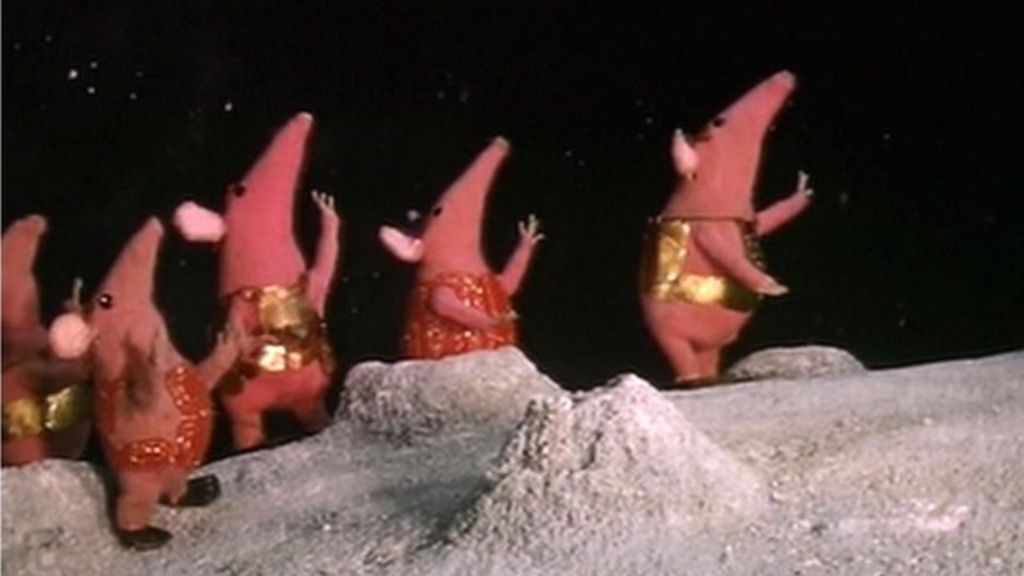
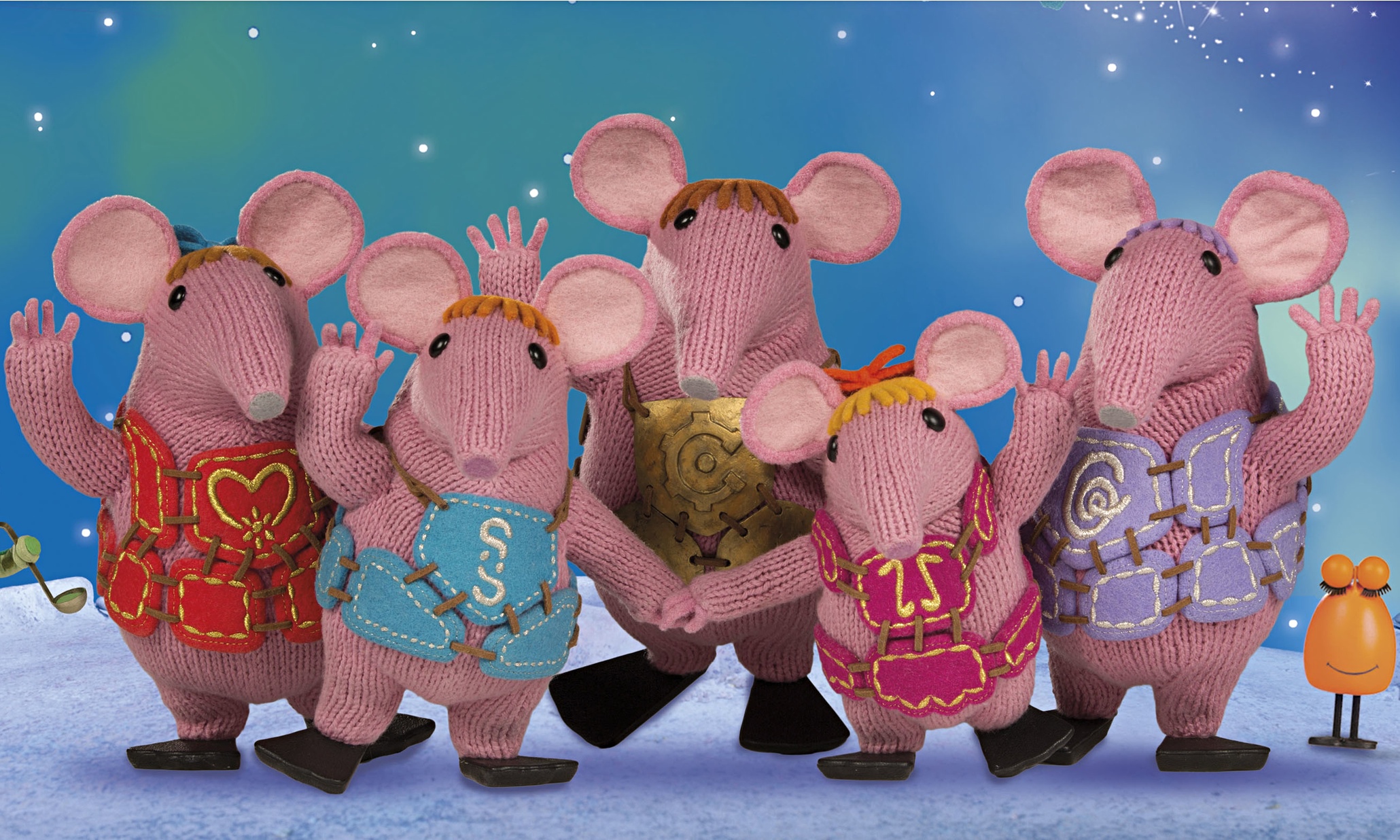
The 'Clangers' was a collection of short films about a race group of creatures who live on and inside a small planet like the moon. They speak  in whistles, and only green soup which can only be supplied by the Soup Dragon, and blue pudding. Prosgate was the shows animator, writer and illustrator and Firmin was the model maker, he designed the figures and his wife dressed them,  he was also an illustrator.  The programme was first broadcasted on BBC1 between 1969 -1972, and they were followed by a special episode, released in 1974. A third series was aired in the United Kingdom  on the  15th of June 2015, broadcasted on  the CBeebies TV channel. The new episodes  were still made using stop motion animation instead of the computer generated graphics which can be seen in children's TV shows, such as 'Fireman Sam', 'Noddy' and 'The Wombles'. One of the most well remembered aspects of the show was the use of sound effects, using music written by Vernon Elliot under the instructions of Prosgate. When the music was being recorded by the pair in a village town hall, they often left  the window open which would mean that the sound of tweeting birds could be heard in the finished product. The clangers also made a distinctive whistling sound, made using swanee whistles and became and iconic characteristic of the much loved characters. The creators say that the creatures live in vacuum, so they communicate in a type of nuclear magnetic resonance. 


https://www.youtube.com/watch?v=Ok6CoIwcJ-E

https://www.youtube.com/watch?v=EsAyyOKoTik


'Bagpuss' was a children's TV series, made by Oliver Postgate and Peter Firmin. Despite  only releasing  13 episodes, bagpuss is is remembered by the nation. The series was repeated in the UK for 13 years, and in 1999 the show won a BBC poll for 'the UK's favourite children's TV programme'. The series was first broadcasted from the 12th of February 1974, until May 1979. The title character was  a soggy old cloth cat, baggy and a bit loose at the seams. Each episode began in the same way, beginning with  a series of sepia toned  images. The viewer is about a little girl named Emily, played by Firmins daughter. She owned a shop that gave lost and broken things a home  and displayed them in the window, so their owners could  collect them however the shop did not sell anything.  She left the large, saggy, pink and white striped cat named Bagpuss at the front. Firmin had  originally intended for Bagpuss to be a retired Indian Army cat, who entertained children in the hospital. His "visible  thoughts" would  appear in a "thinks bubble" above his head. Postgate and Firmin were asked to develop this character for a BBC programme, it was decided to place Bagpuss in the shop with other characters and to use his "thinks bubble" as  a way to illustrate the stories and fix or explore the objects that Emily found. 

https://www.youtube.com/watch?v=dpwhohWhrEE


I believe that Peter Firmin had a significant impact on the development of using stop motion, because despite using puppets, he warmed a nation to his characters  and this has been mirrored in later years in children's programmes such as 'sooty', as he never actually speaks but squeaks instead. The work of Willis O'Brien and Ray Harryhausen can be seen as Bagpuss is realistic, and mimics the body language and characteristics of a real cat.


Burton uses carefully developed puppetry and gothic narratives to appeal to the darker side of childrens entertainment, despite Disney dropping him because they thought he had "wasted money" on a film that was too dark for children to see. His puppets are skillfully developed using techniques the enable them to perform enhanced facial expressions and movements, which convey emotion clearly. Burtons work in comparison to Firmins is done to a higher quality, the puppets are developed so they move smoothly. The puppets that can be seen in work like 'Bagpuss' and 'Clangers' appears clunkier, and less realistic. At the same time Firmins work appeals to the softer and more innocent aspect of children's TV, using animals to connect with children. It could be argued that Firmins work was more skilfull than Burtons as he was able to communicate emotions through characters that cannot speak, however this can also be seen in Burtons work with characters like sparky the dog in 'Frankenweenie'. 


how do these developers impact the future of stop motion


Willis O'Brien

Willis O'Brien was born on the 2nd of March 1886, he died on November the 8th 1962.  Willis was an American stop motion animation and special effects  pioneer. ASIFA Hollywood say he was responsible "for some of the best images in cinema history". The artist  is most well known for his work on films including  "The lost world", the iconic films "King Kong", and "Mighty Joe Young", which he won the academy award for best visual effects in 1950.

https://www.youtube.com/watch?v=vDBkbHtjB6s


As a teenager O'Brien  began his artistic career working as a cowboy, cartoonist and boxer and these three hobbies would build the foundation for one of his most well known pieces of work. He the began to focus his attention sculpting animal and human figures. Willis would add molded rubber to his figures, which would ad the freedom of movement and character. His creative abilities were noticed by the Edison company, who decided to hire him to produce a few shorts set in the prehistoric era. As his skills and career began to develop, his confidence began to grow and he started to build more complex models. His models could move, fight and looked like they could breathe,which confused audiences imagination with fear.


To prepare for  'King Kong', released in 1933, Willis went  to zoo's to study the behaviour of  gorillas and he went to boxing matches to watch their interactions and be able to better stage his own work. His attention to  detail is what made his work so different and set his work apart from other artists at the time. The king kong model was 18 inches high and used a new style of projection film effect that would amaze audiences.  Each scene was shot one frame at a time to create the illusion  of movement. O'Brien had a  skill too give a lifeless character a personality that audiences would be able to "understand and connect with."


Although his technique  was thought of as a  "large technical process", it was able to combine stop motion with real life.  'King Kong' has been recreated repetativley in film and TV times using modern animation techniques, making it iconic in cinematic history. Additionally, other films that combined animation and real life, such as 'Who framed Roger Rabbit' would not be possible without Willis O'Brien's creation of king Kong and the ideas that he introduced.


Ray Harryhausen 

Ray Harryhausen was born on the 29th of June 1920, and died on may the 7th 2013, he was a British artist,writer,producer and visual effects creator, and he is responsible for a form of stop motion known as "dynamation". Ray was most well known for his work with Willis O'brien on "mighty Joe young", which won him an academy award for best visual effects for.  He is also known for his work on 'the 7th voyage of sinbad' in 1958, and 'jason and the Argonoauts' in 1963, which contains a famous sword fight with seven skeleton warriors.  His last film was released in 1981 and it was 'clash of the titans' and after he retired from the industry.

https://www.youtube.com/watch?v=p5uzwh4pLmQ

After he saw  'King Kong' in 1933, Harryhausen began to spend his younger years experimenting with creating  short animations, which were mostly inspired by the  science fiction literary genre at the time. The shorts used stop motion for scenes which showed creatures on the island or Kong.  O'briens work on 'King Kong' inspired Harryhausen and a friend  to meet with him. O'Brien critiqued Harryhausen's first models and encouraged him to take classes in graphic arts and sculpture to develop his skills.


Harryhausen's first model animation job, was on George Pal's 'Puppetoons' shorts which were based on his first demo reel of fighting dinosaurs from a project he  called 'Evolution of the World'  , however  it was never finished. Moreover, during the second world was he served in the United States Special Services Division, as a loader, clapper boy, gofer and in later  years he worked as a camera assistant, whilst he also worked at home on short animated  films about the use and developcombined the bacgrment of military equipment.  After the war he  found some rolls of  film, which he used them to make a series of  short films based on fairy tales,  he described them as his                                                                          "Teething-rings".


Harryhausen was most famous for his ability to be able to give life to giant models, his models were carefully constructed so they moved realistically and could even be seen breathing. Harryhausens iconic cinematic experiences included animated model figurines that would often be seen - battaling with human enemys, biting them and flying away. His work may seem clunky when compared to todays animations, but at the time these effects we cutting edge and a huge step forward. Each scene would be shot one frame at a time,however this technique could soon become very exhausting and tedious. For example, the four minuet and thirty-seven second human fight sequence in 'Jason and the Argonauts' is reported to have taken four and a half months to film, this time included roughly 184,800 movement of his puppets.

Later using a technique he invented , which he called 'Dynamation', Harryhausen's models were able to interact with actors on screen in a realistic way.The process combined the background and the foreground by taking photo minatures infront of a rear projection. Sometimes, Harryhausen would shoot infrornt of a a partially covered glass screen. Later he would superimpose live footage on the partially covered part of the screen. This would help to make the creature appear as if they were in the middle of live action. 

Harryhausen was hugely sugnificant in the role of developing stop motion becasue it was his techniques that allowed animators to combine realistically made models with digitally enhanced creatures. He used carefully constructed puppets that appeared realistic, so he was able to form a connection between his characters and his audience.However the work of Willis O'brien can clearly be seen in his work, as he similarly used realistic models in his work. 


Tuesday, October 9, 2018

How do these pioneers impact the future of stop motion?


Joseph Plateau 


Joseph Plateau was born on the 14th of October 1801, and he died on the 15th of September. Plateau was a Belgian physicist and he was one of the first people to create the illusion of a moving image. 

The phénakisticope was the first widespread animation device that created the illusion of motion. The phenakistiscope is thought off as one of the first forms of moving media entertainment created the basis for the future motion picture and film industry.

The device is a spinning cardboard disk which is attached to a handle. and there are a sequence of images placed on the inside. There are also small rectangles are also around the disc, which keep the images from blurring together. The user should spin the handel, and look through the slits across.

The phenakiscope was really important to the development of animation because it was the first example of a moving image, which gave other people ideas on how to create their own animations.


William Horner


William Horner was born on the 9th of June 1786, and he died on the 22nd of September 1837. He was a British mathematician and headmaster. He wrote in detail about functional equations, number theory’s and optics. William invented the zoetrope,which was a device used to create the effect of motion in film.

The name zoetrope is composed from two Greek words, “Zoe” means life and and tropos translates to turning, so the zoetrope means wheel of life. A zoetrope is one of many pre film animation techniques to create the illusion of motion, by displaying a sequence of images using progressive movement.

The zoetrope is made of a cylinder with  slits in the sides, which allowed  light to travel through. On the inside would be a sequence of images on a band on the inside of the cylinder. As the wheel is spun, the viewer would look through the slits , helping to create the effect of movement and keeping the images from blurring together. The zoetrope worked on the same ideas  as the phenakiscope, however it was considered more convenient and efficient because of the advantage of multiple viweing.The drum is on a spindle base and the faster the drum was spun, the smoother the images would be.

The zoetrope was one of the first examples of moving images, as it was a development on the phenakiscope because more than one person could view the moving image at any one time.  Animations and CGI today would not be possible without  these early developments and experiments on light and movement.


Charles-Émile Reynaud  


Charles-Émile Reynaud  was born on the 8th of  December 1844 , and he died on the 9th of  January 1918. He was a French inventor, he introduced the praxinoscope and the first projected animated films.


The praxinoscope was an animation device that was introduced in 1877, after the zoetrope. Similarly, to the zoetrope, it used a sequence of images, placed on the inside on a wheel. However, the praxinoscope was an improvement on the zoetrope because it replaced the viewing strips with mirrors on the inside of the cylinder, so reflections of the pictures will appear more or less clear as the wheel was turned. The mirrors are a successful development on the zoetrope, because it meant it could produce a brighter and less distorted picture than the zoetrope was able too  produce


The praxinoscope would not be possible without the technology of the phenakiscope, which was the foundation of all moving images. It was significant because it was able to produce a less distorted image than the zoetrope, as a result of the addition of mirrors and further established the idea fluid movement. 

Without these early pioneers and technology, animated films by the likes of Tim Burton would never have existed, due to experimenting with  fluid movement and light.


How do these techniques impact the future of stop motion?


How do these techniques impact on the future of stop motion?

These early techniques were important in the role of developing animation as we know it today because they helped animators foster techniques and creativity.

The persistence of vision –

The human eye has the power to create a memory of an image it has just seen. 


In April 1825 the first Thaumatrope was released by W. Phillips. The fact that the image of one side of the disc seems to blend with the image of the other side when it is looked at while it is twirled very fast, is often used as an illustration of persistence of vision.


https://www.youtube.com/watch?v=eZXfFGYHpsM

Stop frames -

The term stop frames is also known as stop motion animation, a technique used in animation where objects are physically manipulated in small movements in each frame. When the sequence is played back, the object appears to perform a single movement. Dolls with moveable joints and clay figures are most commonly used for stop motion, as they move easily. Equally, stop motion films can also be made using humans, household appliances and other objects that can be moved with ease.

The first example of stop motion was introduced by Albert E. Smith and J. Stuart Blackton with ‘the humpty dumpty circus’, where a toy circus of acrobats and animals come alive. Segundo de Chomón released ‘El Hotel Eléctrico’ in 1907, and used similar techniques as Blackton’s humpty dumpty.

https://www.youtube.com/watch?v=K1zKxqzDoyE


One of the earliest examples of Claymation was thought of as a  “modelling extraordinary” by audiences. In December 1916, Helena Smith Dayton began to experiment with stop motion using clay. She released her first film in 1917,  an adaption of Shakespeare’s Romeo and Juliet.


Animations like the Disney films today and DreamWorks productions would not be possible without the discovery of movement with these early animators, as movements can be done quickly and more efficiently, without judder.

Frame rates –

Frame rates are usually described as frame frequency’s, they are represented in hertz an they are the speed a sequence of images appear on a display, which helps to create the effect of movement in motion capture systems and computer graphics.
Early silent films were filmed at about 16 – 20 frames per second, however the cameras had to be hand cranked and the rate would often change depending on the scene and the feelings they were trying to convey. Projectionists changed the frame rate, by adjusting a rheostat which controlled the voltage that would power the film. The companies  that had created these films  intended them to be shown at a higher frame rate than they were originally  filmed in, however the image would appear “jerky”. To help try and reduce this projectors were being used with a dual or triple blade shutter, which meant the frame was shown two or three times, which helped to increase the flicker rate to  48 – 72 hertz and reduced eye strain.

When sound films were introduced in 1926, the variations in speed could not be used anymore, because the ear would be more sensitive to the changes in frequency’s. Theatres has been showing silent films at 22 – 26 frames per second, so 24 frames per second was chosen for sound. In around 1927 – 1930, many studios had started to update their equipment, and so 24 frames per second became standard for 35millimeters of sound film. Using 24 frames per second meant that the film would be able to travel through the projector at 456 millimetres per second. This allowed two blade shutters to project a collection of images at 48 frames per second. 

In animation, characters were shot “on twos”,meaning that there will be one drawing for every two frames of footage and twelve drawings per second of film. The image rate is low, but the fluidity of movement was sufficient. When a fast movement was needed, the film would need to be shot “on ones” to present  the image effectively, because “on twos” would be to slow. To keep costs down, a combination of both techniques could be used. Modern video standards use higher frame rates at about  120-300, so movement will appear smooth.

Modern video uses a variety of frame rates, due to the the mains frequency of electric grids. Broadcasts on television were developed at frame rates of about 50 – 60 hertz, sometimes videos were broadcasted at around 25-30 frames per second, doubling each frame to make movement more fluid. In order to change 24 frames per second into 60 frames per second, every odd frame was doubled and every even frame was tripled, which created uneven motion. Additionally, modern video standards can support up to 300 frames per second, which allows frames to be evenly multiplied and creates smoother movement.

Frame rates are hugely significant in the role of developing animation, as well known animations today, such as ‘Early man’ or ‘finding nemo’ would not be possible if they used a lower frame rate because the image would appear to judder


Bibliography